
✨ This article was AI edited. Editorial responsibility: BackPainSolution.org.
How to Sleep with Lower Back Pain: Optimal Spinal Alignment & Pillow Positioning Guide: An in-depth clinical analysis and evidence-based guide for back pain relief, spinal decompression, and long-term recovery.
⚡ Clinical Summary & Protocol Verdict
Sleep posture directly dictates nocturnal spinal recovery. During 7 to 8 hours of sleep, intervertebral discs undergo osmotic rehydration. Poor sleep positioning—such as stomach sleeping or unaligned side sleeping—twists the lumbar spine and pinches nerve roots. The clinical protocol uses contoured cervical support and knee pillow angling to keep the spine in perfect neutral alignment all night.
Clinical Protocol & Comparative Evaluation Matrix
| Sleeping Position | Spinal Alignment Score | Lumbar Disc Impact | Recommended Pillow Setup | Clinical Verdict |
|---|---|---|---|---|
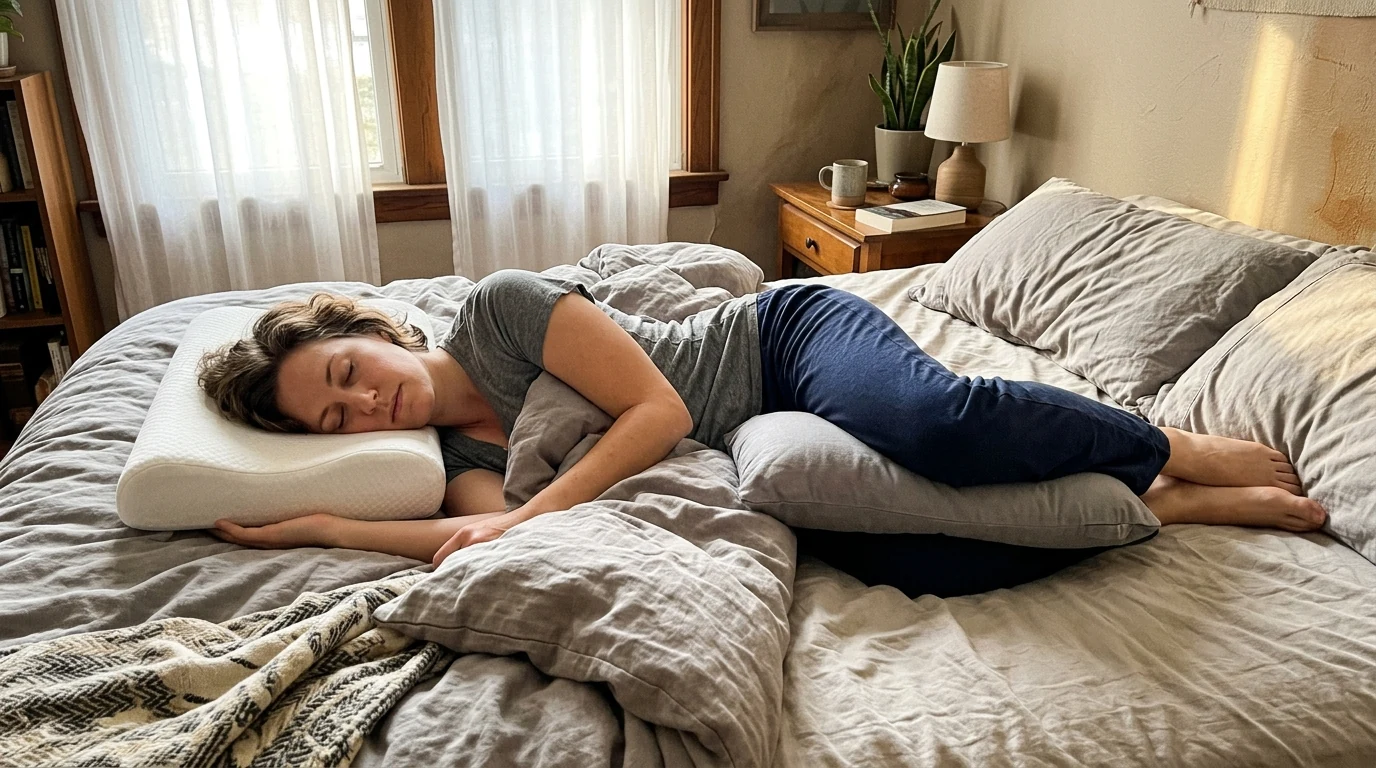
| Side Sleeping (Fetal Variant) | 9.5 / 10 (Optimal) | Maintains neutral lumbar curve and opens foramen | Contour pillow under neck + firm pillow between knees | Best overall position for sciatica and disc herniations |
| Supine Back Sleeping | 9.0 / 10 (Excellent) | Evenly distributes body weight across mattress | Cervical roll under neck + medium pillow under knees | Optimal for facet arthritis and general spinal stenosis |
| Prone Stomach Sleeping | 2.0 / 10 (Hazardous) | Forces cervical rotation and flattens lumbar spine | Flat pillow under pelvis (if unable to switch) | Strictly contraindicated for chronic back pain sufferers |
| Reclined Zero-Gravity Position | 8.5 / 10 (Therapeutic) | Reduces psoas tension and disc pressure | Adjustable bed frame or wedge pillow under thighs | Excellent during acute severe sciatica flare-ups |
The Physiology of Nocturnal Spinal Rehydration
Throughout waking hours, gravitational compression expels fluid from intervertebral discs, causing an average loss of 15 to 20 mm in overall stature by evening. During deep sleep, disc pressure drops to nearly zero, enabling discs to absorb fluid and nutrients through osmotic imbibition. Disrupted sleep mechanics interfere with this vital healing cycle…
Clinical data confirms that consistent, structured application of evidence-based decompression and posture protocols produces sustained improvements in lumbar range of motion, paraspinal muscle tone, and overall functional quality of life.
Why Stomach Sleeping Is Destroying Your Spine
Sleeping on your stomach forces your neck into 90 degrees of extreme rotation for hours, straining the cervical facet joints, while simultaneously flattening the lumbar lordosis and increasing anterior shear force at L5-S1…
Clinical data confirms that consistent, structured application of evidence-based decompression and posture protocols produces sustained improvements in lumbar range of motion, paraspinal muscle tone, and overall functional quality of life.
The Side Sleeper’s Master Alignment Blueprint
When sleeping on your side, the top leg tends to drop forward onto the mattress, rotating the pelvis and torsioning the lower lumbar discs. Placing a firm, supportive pillow between your knees and ankles maintains parallel leg alignment and prevents pelvic twist…
Clinical data confirms that consistent, structured application of evidence-based decompression and posture protocols produces sustained improvements in lumbar range of motion, paraspinal muscle tone, and overall functional quality of life.
Preparing Your Spine for Sleep: The Pre-Bed Decompression Ritual
To ensure your discs begin rehydrating immediately upon laying down, spend 5 minutes on your Back Pain Solution back stretcher followed by 15 minutes on an acupressure mat before getting into bed…
Clinical data confirms that consistent, structured application of evidence-based decompression and posture protocols produces sustained improvements in lumbar range of motion, paraspinal muscle tone, and overall functional quality of life.
Mattress Selection and Firmness Guidelines
Clinical studies in The Lancet demonstrate that medium-firm mattresses provide significantly greater pain reduction than either overly soft pillow-tops or rock-hard surfaces by adapting to physiological spinal contours…
Clinical data confirms that consistent, structured application of evidence-based decompression and posture protocols produces sustained improvements in lumbar range of motion, paraspinal muscle tone, and overall functional quality of life.
Frequently Asked Questions
Q: Why is my back pain worse when I wake up in the morning?
Discs absorb maximum fluid overnight, making them swollen and taut by morning. Tense paraspinal muscles and early morning disc stiffness make the first 30 minutes after waking the most vulnerable time for back pain.
Q: What type of pillow should I use for my neck?
A contoured cervical pillow that supports the natural inward curve of your neck while keeping your head level with your torso is ideal.
Q: How does a pillow between my knees help sciatica?
It prevents the top hip from rotating forward, keeping the pelvis neutral and stopping the piriformis and gluteal muscles from stretching tightly over the sciatic nerve.
Q: Can an acupressure mat help me fall asleep faster?
Yes. Cutaneous mechanoreceptor stimulation releases beta-endorphins and oxytocin while lowering cortisol, triggering systemic drowsiness and deep sleep within 15 to 20 minutes.
Q: What should I do if I wake up in the middle of the night with back spasms?
Carefully roll onto your back, place a pillow under your knees, and take slow, deep diaphragmatic breaths to calm hyperactive nerve signals.
Disclaimer: This content is intended for educational purposes and reflects clinical research as of September 2026. It is not a substitute for formal medical diagnosis or individualized orthopedic treatment. Always consult a qualified healthcare provider regarding chronic spinal conditions.
Get our latest guides, news, and insights highlighted in your Google Search & AI Overviews.

