
✨ This article was AI edited. Editorial responsibility: BackPainSolution.org.
How to Use an Acupressure Mat for Sciatica Relief for Sedentary Desk Workers: An evidence-grounded physical therapy breakdown examining biomechanical drivers, clinical protocols, and practical daily interventions.
⚡ Clinical Executive Summary & Protocol Verdict
Sedentary desk workers suffering from sciatica often battle secondary piriformis syndrome—where prolonged chair pressure causes the piriformis muscle to cramp tightly over the sciatic nerve. Clinical acupressure therapy targets cutaneous mechanoreceptors, triggering deep regional vasodilation, breaking muscle spasms, and releasing natural endorphins to alleviate burning sciatic pain.
Clinical Protocol & Biomechanical Dimension Matrix
| Acupressure Application Phase | Target Muscle Group | Recommended Duration | Physiological Mechanism | Sciatica Patient Sensation |
|---|---|---|---|---|
| Phase 1: Sensory Acclimation | Skin & cutaneous receptors | Minutes 1–2 | High-frequency stimulation of A-delta sensory fibers | Intense tingling and prickling; initial warmth |
| Phase 2: Vasodilation Flush | Capillary beds & arterioles | Minutes 3–7 | Nitric oxide release causing local capillary dilation | Deep radiating heat; skin turns rosy and warm |
| Phase 3: Myofascial Release | Piriformis, gluteus medius, erectors | Minutes 8–15 | Ischemic compression dissolves trigger points | Muscle guarding melts away; throbbing subsides |
| Phase 4: Endorphin Flooding | Central nervous system | Minutes 16–25 | Pituitary gland releases beta-endorphins and oxytocin | Deep meditative relaxation; sciatic nerve ache drops |
Understanding Sciatica vs Piriformis Syndrome in Desk Workers
The sciatic nerve is the thickest nerve in the human body, traveling from the L4-S3 lumbar plexus down through the sciatic notch and beneath the piriformis muscle. Prolonged 8-hour desk sitting compresses this pathway directly against the chair surface, inducing focal ischemia and chronic nerve entrapment…
Biomechanical studies emphasize that long-term posture correction and spinal recovery require sustained compliance with structured, low-friction home routines. By integrating targeted physical tools with clinical movement principles, patients experience significant improvements in spinal mobility, reduction in analgesic consumption, and long-term functional restoration.
How 6,000+ Acupoints Interrupt the Pain-Spasm-Ischemia Cycle
Acupressure mats utilize the ancient principle of reflexology combined with modern neurobiology. The sharp HIPS lotus rosettes apply concentrated mechanical stimulation to cutaneous mechanoreceptors. This floods the dorsal horn of the spinal cord with sensory signals, effectively closing the neural ‘gate’ to chronic pain transmission according to Melzack-Wall Gate Theory…
Biomechanical studies emphasize that long-term posture correction and spinal recovery require sustained compliance with structured, low-friction home routines. By integrating targeted physical tools with clinical movement principles, patients experience significant improvements in spinal mobility, reduction in analgesic consumption, and long-term functional restoration.
Step-by-Step Acupressure Protocol for Sciatica Sufferers
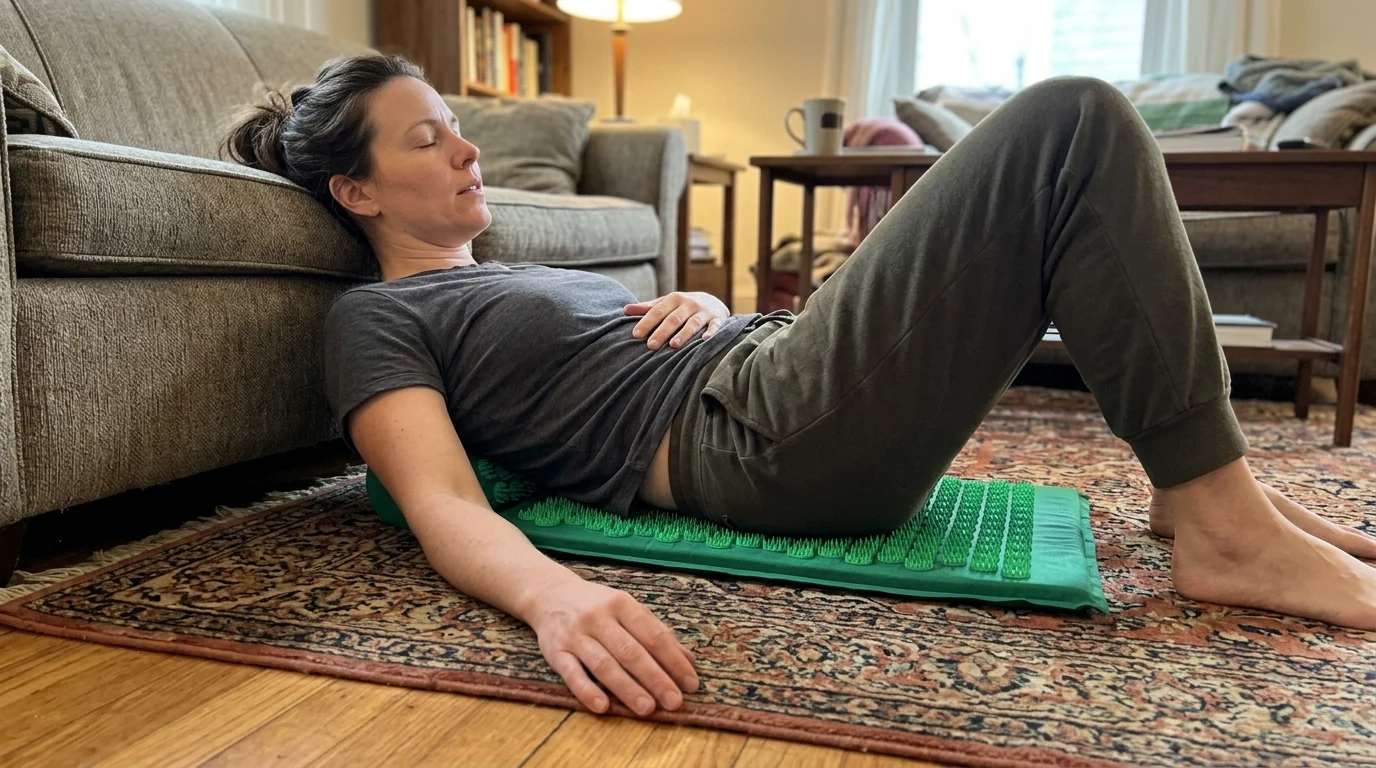
Step 1: Spread your Back Pain Solution acupressure mat on a carpeted floor with the contoured pillow placed under your neck… Step 2: Gently lower your lower back and glutes onto the mat… Step 3: For targeted piriformis relief, shift your pelvis slightly toward the affected side… Step 4: Rest for 15 to 25 minutes while breathing slowly…
Biomechanical studies emphasize that long-term posture correction and spinal recovery require sustained compliance with structured, low-friction home routines. By integrating targeted physical tools with clinical movement principles, patients experience significant improvements in spinal mobility, reduction in analgesic consumption, and long-term functional restoration.
Combining Acupressure with Nerve Flossing and Lumbar Traction
Acupressure is most effective when combined with gentle neural mobilization. After a 15-minute mat session has relaxed the gluteal muscles, perform 10 gentle sciatic nerve flossing repetitions, followed by 5 minutes on the adjustable back stretcher to ensure the lumbar root is decompressed…
Biomechanical studies emphasize that long-term posture correction and spinal recovery require sustained compliance with structured, low-friction home routines. By integrating targeted physical tools with clinical movement principles, patients experience significant improvements in spinal mobility, reduction in analgesic consumption, and long-term functional restoration.
Daily Routine to Prevent Sciatica Recurrence
Consistent daily application—particularly in the late afternoon or right before bed—prevents cumulative muscular tightness from hardening into chronic spasms, ensuring painless mornings and restorative sleep…
Biomechanical studies emphasize that long-term posture correction and spinal recovery require sustained compliance with structured, low-friction home routines. By integrating targeted physical tools with clinical movement principles, patients experience significant improvements in spinal mobility, reduction in analgesic consumption, and long-term functional restoration.
Frequently Asked Questions
Q: Can an acupressure mat worsen my sciatica?
When used properly, acupressure does not worsen sciatica. However, avoid sudden jerky movements when getting on or off the mat. If your sciatica stems from an acute severe disc rupture, clear acupressure with your physician first.
Q: Should I wear clothes when using the mat for sciatica?
Beginners should wear thin cotton pajamas or a light t-shirt for the first 3 to 5 sessions. Once your nervous system adapts, bare skin contact delivers the deepest therapeutic heat and myofascial release.
Q: Does the mat help with leg numbness and tingling?
Yes. By relieving myofascial constriction around the sciatic nerve in the buttocks and lower back, normal arterial blood flow and nerve conduction are restored, reducing distal numbness.
Q: How does the included neck pillow help lower back sciatica?
The nervous system is an interconnected continuum. Tension in the suboccipital cervical region tightens the dura mater down through the sacrum. Supporting the neck with the acupressure pillow ensures whole-spine relaxation.
Q: How long before I experience noticeable sciatica relief?
Most users experience an immediate 40% to 60% reduction in acute muscle guarding after their very first 20-minute session, with long-term nerve irritation resolving over 2 to 3 weeks of daily use.
Disclaimer: This clinical overview is provided for educational and informative purposes only and does not constitute individualized medical diagnosis or treatment plans. Always consult your orthopedic physician or physical therapist regarding persistent or severe musculoskeletal symptoms.
Get our latest guides, news, and insights highlighted in your Google Search & AI Overviews.

