
✨ This article was AI edited. Editorial responsibility: BackPainSolution.org.
How to Wear a Posture Corrector Brace Without Muscle Weakness for Post-Injury Rehab Patients: An in-depth clinical analysis and evidence-based guide for back pain relief, spinal decompression, and long-term recovery.
⚡ Clinical Summary & Protocol Verdict
Post-injury physical therapy protocols reveal: wearing a posture corrector brace does NOT cause muscle atrophy if worn as a proprioceptive training tool rather than an all-day passive cast. By utilizing 30-to-60-minute targeted wear windows during peak muscular fatigue, patients retrain scapular stabilizers, protect healing spinal ligaments, and avoid dependent muscle weakness.
Clinical Protocol & Comparative Evaluation Matrix
| Rehab Recovery Stage | Daily Wear Duration | Optimal Activity Context | Neuromuscular Goal | Patient Safety Precaution |
|---|---|---|---|---|
| Stage 1: Acute Protection (Weeks 1–2) | 20–30 minutes, 2x daily | Quiet seated tasks, reading, light computing | Protects healing tissues from excessive slouching | Keep straps snug but not restrictive to breathing |
| Stage 2: Neuromuscular Re-education (Weeks 3–4) | 45–60 minutes, 1–2x daily | Long desk sessions, computer focus blocks | Stimulates proprioceptors when shoulders drop forward | Remove brace immediately during active physical therapy |
| Stage 3: Fatigue Maintenance (Weeks 5–8) | 30–45 minutes as needed | Late afternoon fatigue periods, long drives | Prevents postural relapse at end of demanding days | Pair with active prone cobra and band pull-apart drills |
| Stage 4: Postural Independence (Week 9+) | Intermittent / situational | Extended sedentary events or high-strain desk days | Maintains subcortical muscle memory long term | Rely primarily on natural core and thoracic endurance |
The Clinical Debate: Do Posture Braces Cause Muscle Atrophy?
Orthopedic rehabilitation specialists distinguish sharply between rigid cast immobilization and functional elastic bracing. When a brace locks joints completely, disuse muscle atrophy occurs within 72 hours. In contrast, Back Pain Solution’s adjustable posture brace provides dynamic clavicle retraction…
Clinical data confirms that consistent, structured application of evidence-based decompression and posture protocols produces sustained improvements in lumbar range of motion, paraspinal muscle tone, and overall functional quality of life.
Biomechanical Mechanics of Scapular Retraction and Clavicle Support
The human shoulder girdle relies on a delicate force-couple between the serratus anterior, trapezius, and pectoralis minor. When seated fatigue sets in, the rhomboids lengthen eccentrically, allowing the scapulae to wing outward and tilt anteriorly…
Clinical data confirms that consistent, structured application of evidence-based decompression and posture protocols produces sustained improvements in lumbar range of motion, paraspinal muscle tone, and overall functional quality of life.
Step-by-Step Patient Fitting Guide: Avoiding Axillary Pinching
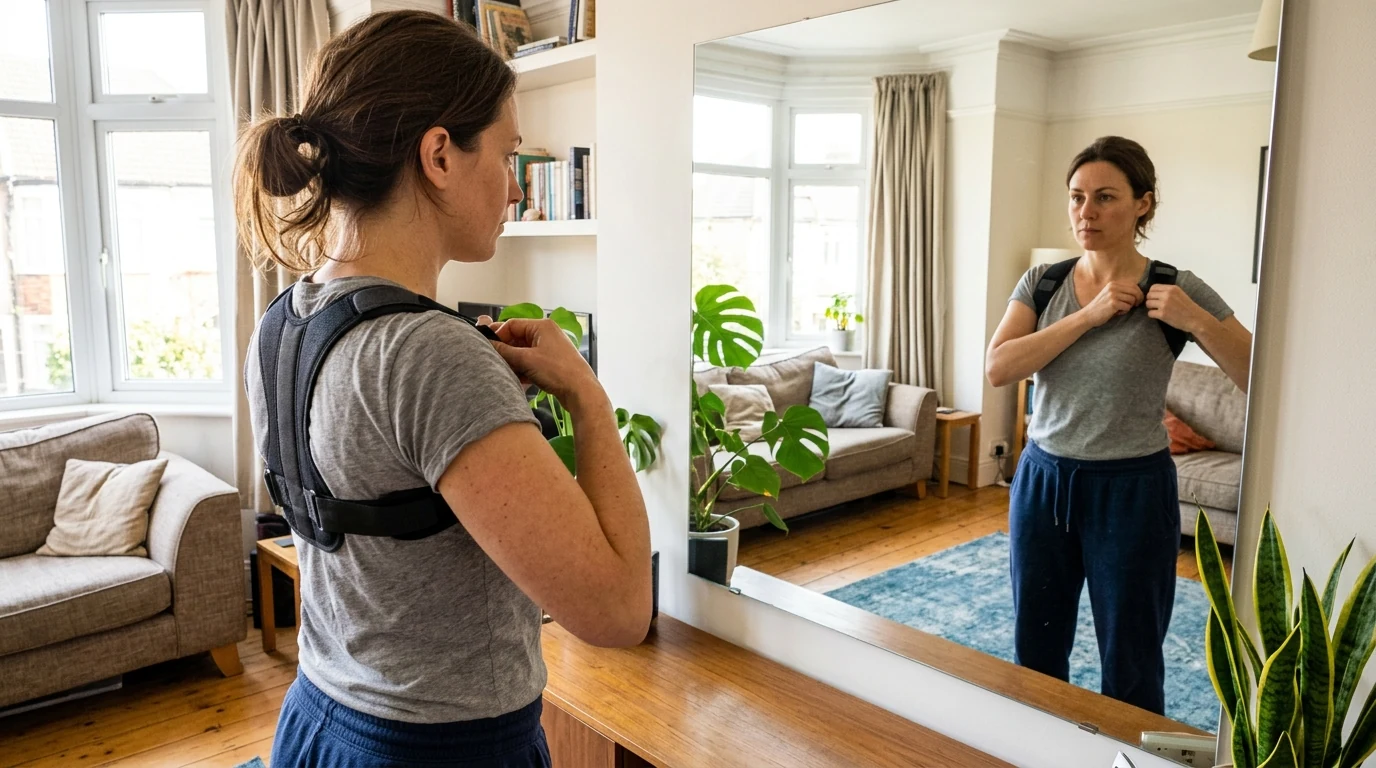
Step 1: Loosen all front straps and slip arms through the shoulder loops like putting on a backpack… Step 2: Stand tall with your chest slightly lifted and shoulders rolled back into neutral… Step 3: Gently draw the adjustment straps forward until you feel mild tactile tension across your clavicles…
Clinical data confirms that consistent, structured application of evidence-based decompression and posture protocols produces sustained improvements in lumbar range of motion, paraspinal muscle tone, and overall functional quality of life.
Top 3 Mistakes Post-Injury Patients Make With Posture Braces
Mistake 1: Overtightening straps until arms turn numb, which compresses the brachial plexus… Mistake 2: Wearing the brace while sleeping, which restricts nocturnal diaphragmatic excursion… Mistake 3: Skipping active strengthening exercises…
Clinical data confirms that consistent, structured application of evidence-based decompression and posture protocols produces sustained improvements in lumbar range of motion, paraspinal muscle tone, and overall functional quality of life.
The Complete Posture Rehab Protocol
Integrate posture brace sessions with daily floor decompression on the adjustable back stretcher to ensure intervertebral disc spaces remain hydrated and decompressed while upper back posture stabilizes…
Clinical data confirms that consistent, structured application of evidence-based decompression and posture protocols produces sustained improvements in lumbar range of motion, paraspinal muscle tone, and overall functional quality of life.
Frequently Asked Questions
Q: Will my back muscles get weaker if I wear a posture corrector?
No, provided you adhere to the 30-to-60-minute intermittent wear schedule. The brace functions as a tactile biofeedback cue, prompting your own muscles to engage rather than substituting for active strength.
Q: Can I wear the posture brace while driving?
Yes. Commuting is a primary contributor to forward slump. Wearing the brace during highway driving helps you maintain neutral lumbar and thoracic contact with your car seat.
Q: How tight should the straps feel?
You should feel gentle guidance when your shoulders round forward, but you should easily be able to slip two fingers under each strap without restriction.
Q: Can I wear it directly against bare skin?
While the breathable neoprene is hypoallergenic, we recommend wearing the brace over a thin cotton undershirt or athletic t-shirt for maximum comfort and skin protection.
Q: How do I know when I no longer need the brace?
When you catch yourself naturally maintaining upright scapular alignment without conscious effort or muscular burning after 2 hours of seated work, you have achieved postural independence.
Disclaimer: This content is intended for educational purposes and reflects clinical research as of September 2026. It is not a substitute for formal medical diagnosis or individualized orthopedic treatment. Always consult a qualified healthcare provider regarding chronic spinal conditions.
Get our latest guides, news, and insights highlighted in your Google Search & AI Overviews.

