
✨ This article was AI edited. Editorial responsibility: BackPainSolution.org.
Sciatica Nerve Flossing & Mobility Routines: Top Physical Therapist Threads from Twitter/X: An evidence-grounded physical therapy analysis exploring clinical protocols, biomechanical research, and practical daily interventions.
⚡ Clinical Summary & Protocol Verdict
Leading sports physical therapists on X emphasize that sciatic nerve irritation requires gentle neural mobilization (‘nerve flossing’) rather than aggressive stretching. When a nerve is inflamed, pulling hard compresses it further. Nerve flossing glides the sciatic nerve smoothly through its fascial sheath, restoring normal axonal axoplasmic flow and relieving radiating leg pain in under 5 minutes.
Clinical Protocol & Comparative Evaluation Matrix
| Nerve Flossing Variation | Starting Posture | Head / Neck Motion | Leg / Ankle Motion | Prescribed Repetitions |
|---|---|---|---|---|
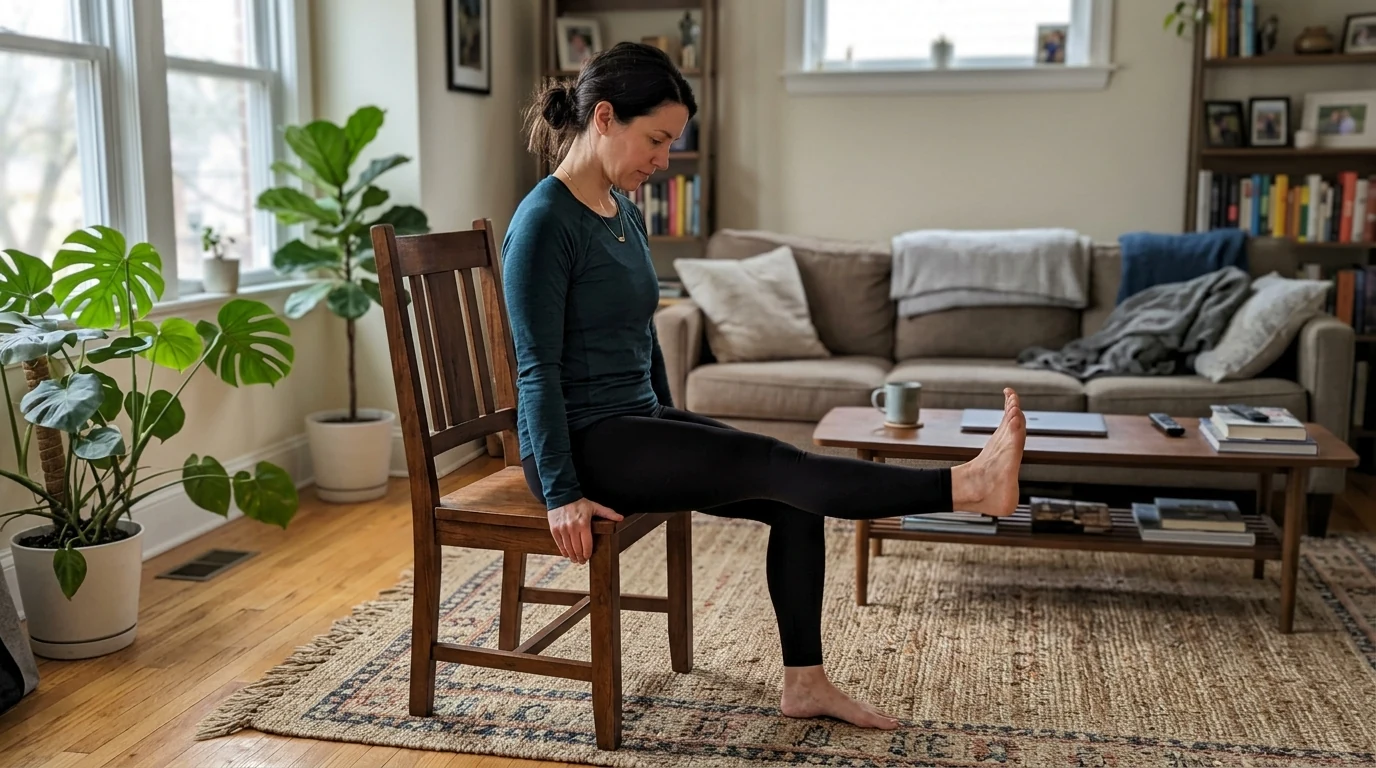
| Seated Sciatic Slider (Gentle) | Seated on edge of firm chair, hands on thighs | Tilt head backward as leg extends | Extend knee forward and dorsiflex ankle | 10–12 smooth repetitions per side, 2x daily |
| Seated Sciatic Tensioner (Advanced) | Seated tall on chair | Tuck chin to chest as leg extends | Extend knee forward and pull toes up | Only for late-stage rehab with zero acute pain |
| Supine Hamstring Nerve Glide | Lying flat on back holding thigh at 90 deg | Head resting neutral on floor/pillow | Slowly straighten knee until mild tension | 8–10 gentle repetitions per leg |
| Piriformis Acupressure Release | Seated or supine over acupressure mat | Relaxed cervical spine | Passive gluteal relaxation | 10–15 minutes before performing nerve flossing |
The Neuro-Biomechanics of Nerve Flossing Explained
Nerves do not stretch like elastic muscle tissue; they glide through anatomical tunnels and fascial sheaths. When an L4-S1 disc bulge or hypertonic piriformis muscle inflames the sciatic nerve, adhesions form, restricting this gliding motion and causing burning pain whenever the leg moves…
Physical therapy research demonstrates that long-term recovery from chronic spinal conditions depends on consistent patient adherence to structured, evidence-based home protocols. By pairing targeted mechanical tools with active neuromuscular retraining, patients achieve significant reductions in pain recurrence and lasting functional mobility.
Sliders vs Tensioners: The Critical Difference Physical Therapists Emphasize
A ‘tensioner’ pulls both ends of the nerve simultaneously, which can aggravate an acute flare-up. A ‘slider’ releases tension at the neck while applying gentle tension at the ankle, sliding the nerve through its sheath without straining axonal fibers…
Physical therapy research demonstrates that long-term recovery from chronic spinal conditions depends on consistent patient adherence to structured, evidence-based home protocols. By pairing targeted mechanical tools with active neuromuscular retraining, patients achieve significant reductions in pain recurrence and lasting functional mobility.
Step-by-Step Seated Sciatic Slider Protocol
Step 1: Sit tall on the edge of a firm chair… Step 2: As you straighten your affected knee and pull your toes upward, tilt your head backward toward the ceiling… Step 3: As you bend your knee back to neutral, bring your head back to center… Step 4: Repeat 10 to 12 times in a smooth, rhythmic motion…
Physical therapy research demonstrates that long-term recovery from chronic spinal conditions depends on consistent patient adherence to structured, evidence-based home protocols. By pairing targeted mechanical tools with active neuromuscular retraining, patients achieve significant reductions in pain recurrence and lasting functional mobility.
Pairing Nerve Flossing with Acupressure for Deep Muscle Guarding
Perform nerve flossing immediately after a 15-minute session on your Back Pain Solution acupressure mat. The increased capillary blood flow and endorphin release relax the piriformis, allowing the nerve to glide smoothly without resistance…
Physical therapy research demonstrates that long-term recovery from chronic spinal conditions depends on consistent patient adherence to structured, evidence-based home protocols. By pairing targeted mechanical tools with active neuromuscular retraining, patients achieve significant reductions in pain recurrence and lasting functional mobility.
Long-Term Sciatica Maintenance Blueprint
Combine morning nerve flossing, midday seated posture support, and evening decompression on the adjustable back stretcher to keep the sciatic nerve free from chronic compression…
Physical therapy research demonstrates that long-term recovery from chronic spinal conditions depends on consistent patient adherence to structured, evidence-based home protocols. By pairing targeted mechanical tools with active neuromuscular retraining, patients achieve significant reductions in pain recurrence and lasting functional mobility.
Frequently Asked Questions
Q: Should nerve flossing hurt?
No. Nerve flossing should never reproduce sharp, shooting, or electric pain. You should only feel a gentle gliding sensation. If acute pain occurs, stop immediately.
Q: How many times a day can I floss my sciatic nerve?
Perform 10 to 12 repetitions 2 to 3 times per day. Over-flossing can irritate a sensitive nerve.
Q: Can nerve flossing help with numbness in my foot?
Yes. By restoring normal gliding motion and breaking adhesions, axonal axoplasmic transport is normalized, helping resolve peripheral tingling and numbness.
Q: How does acupressure enhance nerve flossing?
Acupressure releases hypertonic muscle spasms in the gluteal and paraspinal muscles that mechanically trap the sciatic nerve.
Q: When should I avoid nerve flossing?
Do not perform nerve flossing during acute progressive neurological deficits (such as foot drop) or severe unrelenting pain. Consult your physician first.
Disclaimer: This content is intended for educational purposes and reflects clinical research as of September 2026. It is not a substitute for formal medical diagnosis or individualized orthopedic treatment. Always consult a qualified healthcare provider regarding chronic spinal conditions.
Get our latest guides, news, and insights highlighted in your Google Search & AI Overviews.

