
✨ This article was AI edited. Editorial responsibility: BackPainSolution.org.
The Ergonomic Desk Setup for Chronic Back Pain: 10 Mega-Threads Deconstructed from X (2026): An evidence-grounded physical therapy analysis exploring clinical protocols, biomechanical research, and practical daily interventions.
⚡ Clinical Summary & Protocol Verdict
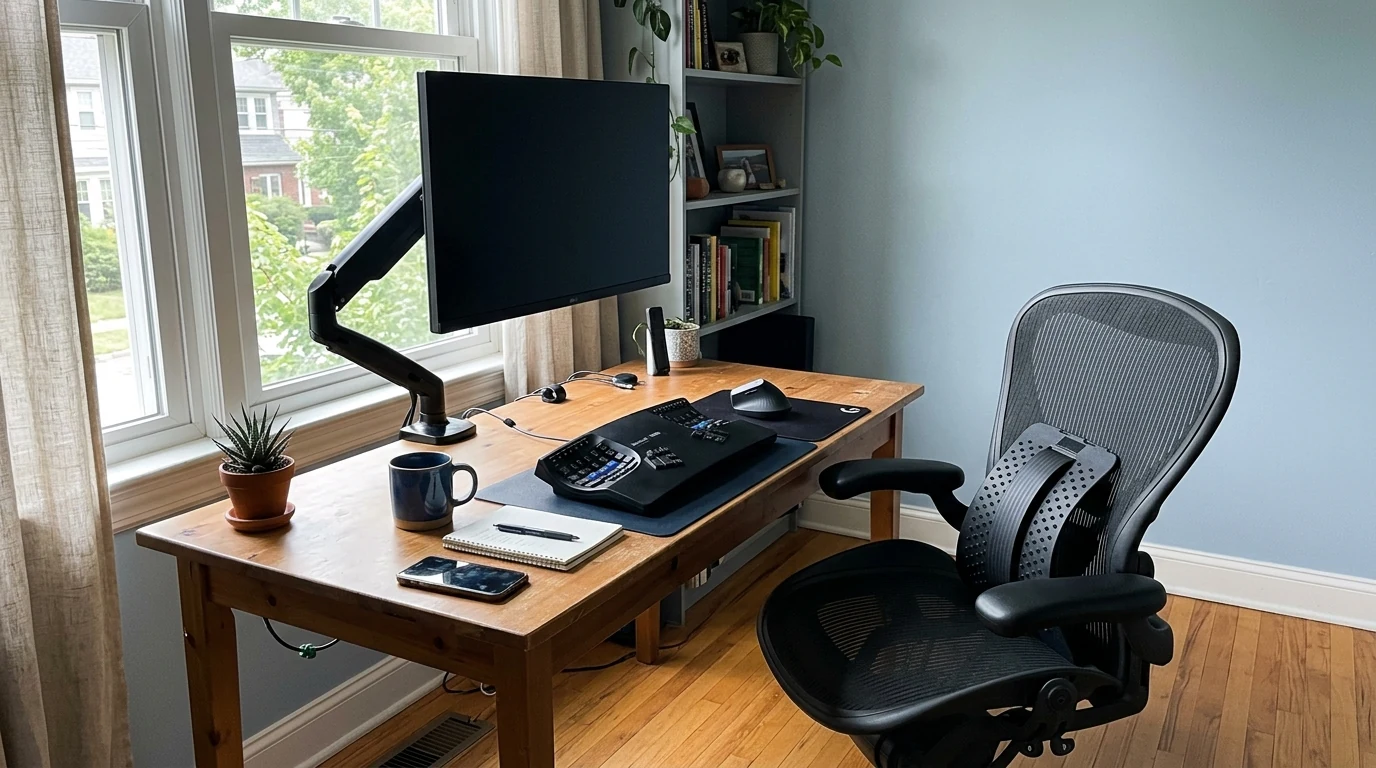
Viral ergonomics mega-threads on X (formerly Twitter) with millions of views deconstruct the exact workstation formulas used by software engineers, remote founders, and physical therapists to eliminate 8-hour desk pain. The winning setup combines screen elevation at eye level, a dedicated lumbar lordosis anchor, 90-degree arm alignment, and tactile posture bracing during deep focus.
Clinical Protocol & Comparative Evaluation Matrix
| Desk Element | Observed Flaw in Typical Setups | Optimal Target Specification | Biomechanical Rationale | Budget Solution |
|---|---|---|---|---|
| Monitor Elevation | Laptop flat on desk; looking downward at 45 deg | Top third of display aligned with eye level at 24 inches | Eliminates 35 lbs of effective cervical forward load | Adjustable monitor arm or sturdy laptop stand |
| Lumbar Spine Support | Empty gap between lower back and chair backrest | Rigid contoured arch filling L1-S1 lordotic gap | Prevents posterior pelvic tilt and anterior disc wedging | Adjustable Back Stretcher positioned vertically |
| Shoulder / Clavicle Alignment | Protracted shoulders rounding forward toward keys | Retracted scapulae with open clavicle angle | Decompresses pectoralis minor and prevents tech-neck | Adjustable Back Posture Corrector Brace |
| Forearm / Elbow Support | Arms reaching forward with wrists bent upward | Elbows resting at 90 degrees flush with desk surface | Eliminates trapezius tension and carpal tunnel risk | Adjustable chair armrests or padded desk rest |
| Hip & Knee Angle | Knees tucked under chair; feet dangling | Hips and knees at 90–100 degrees; feet flat on floor | Prevents hamstring shortening and psoas tension | Adjustable ergonomic footrest |
The Viral X Formula: Why Knowledge Workers Suffer in Plain Sight
On X, tech founders and remote professionals regularly share workstation audits. The consensus finding: even high-earning professionals working on $4,000 laptops often ruin their spines by working with flat laptop screens on kitchen islands…
Physical therapy research demonstrates that long-term recovery from chronic spinal conditions depends on consistent patient adherence to structured, evidence-based home protocols. By pairing targeted mechanical tools with active neuromuscular retraining, patients achieve significant reductions in pain recurrence and lasting functional mobility.
Deconstructing the Top 10 Viral Ergonomics Threads
Key takeaways from the most viral threads: 1. Screen height is non-negotiable; 2. Lumbar support must be firm and arched, not soft foam; 3. Movement intervals beat static standing; and 4. Active tactile bracing during afternoon fatigue prevents postural relapse…
Physical therapy research demonstrates that long-term recovery from chronic spinal conditions depends on consistent patient adherence to structured, evidence-based home protocols. By pairing targeted mechanical tools with active neuromuscular retraining, patients achieve significant reductions in pain recurrence and lasting functional mobility.
The $50 Ergonomic Hack: Lumbar Arch Anchoring
Instead of spending $1,500 on luxury office chairs that still allow slouching, physical therapists on X recommend mounting an adjustable back stretcher vertically against your existing chair backrest to lock in perfect lumbar lordosis…
Physical therapy research demonstrates that long-term recovery from chronic spinal conditions depends on consistent patient adherence to structured, evidence-based home protocols. By pairing targeted mechanical tools with active neuromuscular retraining, patients achieve significant reductions in pain recurrence and lasting functional mobility.
Tactile Biofeedback During High-Cognitive Deep Work
When coding or analyzing complex data, voluntary posture control vanishes. Wearing an adjustable posture corrector provides gentle proprioceptive resistance whenever you begin to slouch…
Physical therapy research demonstrates that long-term recovery from chronic spinal conditions depends on consistent patient adherence to structured, evidence-based home protocols. By pairing targeted mechanical tools with active neuromuscular retraining, patients achieve significant reductions in pain recurrence and lasting functional mobility.
The Complete Workday Spine Routine
Start with an aligned workstation, wear your posture brace for 45 minutes mid-day, and conclude your work session with 10 minutes of floor traction to decompress discs compressed by hours of sitting…
Physical therapy research demonstrates that long-term recovery from chronic spinal conditions depends on consistent patient adherence to structured, evidence-based home protocols. By pairing targeted mechanical tools with active neuromuscular retraining, patients achieve significant reductions in pain recurrence and lasting functional mobility.
Frequently Asked Questions
Q: What is the most important component of an ergonomic desk setup?
Monitor height. Elevating your screen so your eyes align with the top third of the monitor immediately prevents the forward head slump that drives 80% of upper back pain.
Q: Can I use an adjustable back stretcher in an office chair?
Yes. Back Pain Solution is designed for dual use—lay it on the floor for passive decompression, or position it vertically behind your back in your chair for active lumbar support.
Q: How do I prevent leg fatigue while using a standing desk?
Wear supportive, cushioned footwear and use a non-flat anti-fatigue mat that encourages subtle calf contractions and weight shifting.
Q: Should I wear a posture brace all day at my desk?
No. Physical therapists recommend 30 to 60 minutes during your most fatigue-prone hours to retrain muscle memory without causing muscular dependency.
Q: What can I do for end-of-day lower back stiffness?
Spend 5 to 10 minutes resting supine on the adjustable back stretcher to gently reverse seated compression.
Disclaimer: This content is intended for educational purposes and reflects clinical research as of September 2026. It is not a substitute for formal medical diagnosis or individualized orthopedic treatment. Always consult a qualified healthcare provider regarding chronic spinal conditions.
Get our latest guides, news, and insights highlighted in your Google Search & AI Overviews.

